The Rise of Agentic Commerce
Why agents will reshape commerce, starting with travel and shopping
January 2026
For the last 20 years, the internet has had a business model predicated on attention. We designed infinite scrolls to keep you doom-scrolling, notifications became a way to break our focus, and ‘the feed’ became a place to sell your time to advertisers. Every product design choice was optimized for one outcome: more impressions. You, the consumer, became the product.
And that model worked! It created some of the most valuable companies in history and turned digital advertising into a trillion-dollar industry. But it also created an internet that feels increasingly hostile to the people using it.
While the advertising industry on these apps remains a behemoth, as we enter 2026, this model will start to break. Consumers will change their behaviors in ways that current ad-driven platforms cannot serve. Users are much more aware of how these products are designed and the negative impacts of social media and phone usage. They are more skeptical of what they see and increasingly willing to disengage. In the next few years, the core unit of value online will meaningfully change from impressions based to outcomes based.
In part 1 of this essay, I’ll dive into why the “attention economy” has reached its peak and why agentic commerce is next. In part 2, I’ll discuss the 2 sectors I see being most disrupted: travel and shopping. In part 3, I’ll mention a few categories of startups that could emerge as a result of these shifts.
PART 1: Why the “attention economy” has reached its peak and agentic commerce is next
Many people have described consumer frustration with the internet as burnout or screen fatigue. But that’s just part of the problem. The real issue is with cognitive overload.
Over the last 2 decades, as the internet dramatically reduced the cost of publishing and distributing information, the sheer amount of content exploded. As a result, we created an environment that was great at generating options and FOMO, but not great at resolving decisions.
Feeds are the perfect example of this. They’re incentivized to surface content that the algorithm thinks you’re most likely to engage with, not the content that is necessarily correct, useful, or helps you reach an outcome. They’re fundamentally the wrong interface for decision-making entirely.
And as platforms continued to push harder on advertising revenue, content that was polarizing often went to the top, degrading the user experience and putting the onus on them to sort the truth from misinformation.
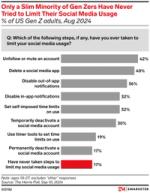
This trend has already been happening for several years and is poised to accelerate
The downstream effect of all this is decision fatigue and therefore a significant impact on commerce transactions. Today, a user booking a flight is often comparing across multiple platforms, navigating sponsored placements, loyalty incentives, and hidden fees. Shopping requires navigating affiliate links and codes and paid rankings.
This is not temporary. The largest platforms remain structurally dependent on advertising, which means they must increase exposure, not reduce noise. Any attempt to meaningfully improve decision quality runs directly against their revenue model. So, they must continue to increase volume through more content, more ads, and more formats. And as confidence in social media continues to erode and fragmentation of discovery increases, agents are well positioned to help.
Consumers are no longer asking for better feeds or more personalization. They want to find ways to bypass feeds entirely. Not necessarily because they want less information, but because they want fewer decisions. This is part of what I wrote about in my piece on content and commerce last year and also why I see an opening for agents.
Instead of asking the user to navigate, agents operate on their behalf. And because agents are not driven by advertising, they only succeed if they have good outcomes. If they don’t work, users will just stop using them.
Agents are especially well suited to solve for decision fatigue. They can process large amounts of fragmented and biased information and collapse it into a single action, cutting down discovery and selection from hours or days into minutes and seconds.
PART 2: The opportunity for AI agents in travel and shopping
I don’t think this shift will affect every category equally. Agents are most effective where decisions are frequent and confidence is low. In categories where browsing is a core part of the product experience (like media and entertainment) the status quo should remain.
In travel and shopping though, it’s a different story. These are decisions people make all the time, with real money on the line and in systems that are confusing by default.
Travel
Travel is a perfect use case for agents because the decision itself is a bundle of trade-offs that are inherently scattered across platforms. Users are constantly balancing price, timing, nonstop vs. connections, seat preferences, loyalty value, and a dozen other constraints. And they’re forced to compare across OTAs, airline and hotel websites, credit card portals, and loyalty programs, each with partial information.
This is where agents make sense. Imagine telling an agent your constraints and preferences: dates, budget, seat and hotel preferences, loyalty programs, etc. The agent could watch prices, evaluate tradeoffs, and book when the conditions were right. Then, after booking, it could stay on the hook for the trip, managing schedule changes, missed connections, or needed refunds. In an industry where people are really frustrated with OTAs, these agents could behave less like search tools and more like a real travel operator.
The big question is: why doesn’t a general agent from OpenAI or Google just do this?
They’ll certainly try and both Gemini and ChatGPT have travel agents that they’ve teased. But travel has a few characteristics that tend to reward vertical solutions.

ChatGPT travel agent mode, source OpenAI
First, travel is not just about finding information. The hard part isn’t finding options, it’s completing the transaction reliably, handling edge cases, and holding context across key steps. Rebookings, refunds, cancellations, customer support, etc. are all places where there is real friction and vertical products are more likely to build solutions that work and are accountable.
Second, travel is not necessarily predicated on the biggest or smartest model, but rather the most connected ecosystem. In order to “win” in travel you need integrations with airline and hotel inventory, GDS access (with companies like Sabre), payment rails, loyalty accounts, customer profiles, and support channels. While these general models are undoubtedly great at reasoning, they do not magically come with the integrations and commercial relationships to execute. Vertical players can offer a much more complete experience.
Third, personalization in travel is high-leverage and hard to do generically. Everyone says “I want a good deal.” But what customers mean can differ wildly. Some people will accept a layover for $80. Others will pay $300 more for nonstop. Some value points while others just value flexibility. Capturing these preferences over time is where a vertical agent can feel less like a chatbot and more like a trusted operator.
There are already several companies pushing toward this model, and we’ll cover them in the next section.
Shopping
Shopping is another category where agents make sense, but for different reasons than travel.
Like travel, shopping decisions are often spread across different platforms. Users have to weigh price, quality, brand trust, and reviews and are looking through e-commerce platforms, social media feeds, and recommendation engines. As mentioned in Part 1, all of this browsing comes with a significant amount of advertising, which has created real decision fatigue.
Similar to the travel use case above, agents can simplify this process and help consumers compare options and make decisions. This is already starting to happen. Traffic from AI chatbots grew significantly this year.
While there is a significant advantage to vertical, travel-specific AI agents, the advantage in shopping will accrue to the largest AI companies like Gemini and OpenAI. Unlike travel, shopping usually ends once the item shows up. There are returns and exchanges, but they’re standardized and already handled pretty well by the largest retailers. There are fewer edge cases and much less need for ongoing support.
More importantly, power in shopping is concentrated. A small number of platforms control a huge share of discovery, inventory, fulfillment, and returns. Partnering with the biggest retailers gets you most of the way there. You don’t need hundreds of integrations to create real value for customers.
The biggest AI players hence have an advantage. They already sit at the top of the funnel, have massive distribution, and are natural partners to large retailers. If they can fold price comparison, checkout, and delivery into one simple flow, they can take a ton of friction out of shopping without having to win the entire stack.
As agents become more ubiquitous, there are several startup categories that will emerge. In the next section, I’ll outline a few categories I’m excited about.
PART 3: Categories where I’m excited for startups to emerge
As an investor, there are a bunch of categories where I see venture-scale businesses around agentic commerce being built. Here are 3 that I’m most excited by.
1: D2C Platforms
Online travel companies are massive. Airbnb, Expedia, Booking Holdings are all $10B+ revenue companies. Consumer sentiment for these companies though is mixed and there’s an opportunity for new, agentic-first OTAs to emerge. These OTAs would more seamlessly integrate into your loyalty programs and preferences and hopefully handle support issues with much higher satisfaction. The incumbent OTAs are optimized for search and booking, but are terrible at resolution.
I’m starting to see several companies that are building for this space. We’re already seeing early signs of what agent-led travel companies can look like. Startups like Miso, Mindtrip, Rove, and Stardrift blend some elements of OTAs (booking functionality, price comparisons, etc.) with white-glove service that can handle booking, rebooking and support. These companies are betting that while travelers care about search and booking functionality, they also want more premium service that deals with issues when things go awry.
These companies should be able to scale quickly because the pain is obvious and there is already a willingness to delegate. The risk here is operational complexity and marketing. The company that wins will have deep integrations, significant levels of support, and will need to compete against the billions of dollars of advertising budgets the traditional OTAs have. But, the opportunity to win here in success is massive.
2: Agent-native advertising networks
In a world where there are more and more vertical consumer AI apps, the need for these apps to monetize will also increase. Advertising in an agent-led world will change however. Instead of competing directly for clicks, brands and companies will compete to be chosen by agents. Companies like Zeroclick and Profound are building tools to help brands (including travel platforms) understand how they can show up in AI-generated answers. Other companies like Imprezia, Kontext, and Koah Labs are creating agent-native advertising experiences that are contextual, constrained by user-preferences, and more outcome aware.
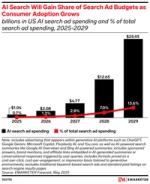
As volume through AI agents and long-tail verticalized consumer apps increases, this category will scale extremely quickly. The key thing these companies will need to solve is trust. Users need to know that the answers they are getting are the best, not like today’s sponsored rankings.
If these companies are able to succeed, advertising in this agent-led world shouldn’t feel like ads at all. Instead, the results should feel like aligned suggestions that are highly consistent with what users are looking for.
3. Data aggregation and normalization for AI agents
For agents to make any of these decisions, whether that means choosing the right product or picking the best flights, they need clean, structured, and timely data. Today, getting pricing, availability, inventory, etc. is either 1) difficult to obtain or 2) extremely siloed for agents to sort through.
This data tends to be scattered across sites or buried inside systems that agents might not be able to access. Data aggregation and normalization will be key for AI agents to become ubiquitous in travel, shopping, and other commerce categories.
Several companies are already targeting this problem. Startups like TinyFish, which recently raised ~$50M from Iconiq Capital, sit underneath the agent layer. TinyFish scrapes, monitors, and structures pricing and availability data for retail use cases. For decades, companies like Sabre have done this for travel. But I think a new, AI-forward Sabre will emerge that will make it easy for travel-specific agents to be built.
Getting better inputs is a key bottleneck to get these new, D2C travel platforms off the ground and I’m excited to see more companies like TinyFish enter the space.
##
In my view, agentic commerce feels inevitable. As platforms continue to get noisier and trust continues to erode, users are going to start looking elsewhere. I’m excited about the use cases that will emerge in travel, shopping, advertising, and infrastructure and the many more use cases that will emerge that I haven’t discussed in this piece.
If you’re building for the future of agentic commerce, please reach out. Our team would love to meet you.