Quantified Self 3.0
The next major phase in health monitoring is here.
April 2026

Has Quantified Self finally arrived?
In just the last six months, Oura Ring closed a $900M round at an $11B valuation and Whoop closed a $575M round at a $10B valuation.
Entrepreneurs have been touting Quantified Self—the practice of using hardware and software to translate biology into data-driven insights for performance and longevity—since the late 2000s. But historically, the category has fallen short.
The adage “hardware is hard” exists for a reason—it’s slow, capital intensive, and fraught with inventory risk. So, most brand name investors have steered clear of the category altogether. The cap tables of wearable darlings like Oura and Whoop prove this: they look more like a hodge-podge of high net worth individuals and sovereign wealth funds, and generally lack the blue chip institutional names you might expect to see.
However, the tides are turning for Quantified Self startups and hardware companies specifically:
- Health monitoring is at an all-time high: Nearly 70% of all Americans track their activity digitally (i.e., via wearable or smartphone app) and almost half of all US adults use at least one wearable. As a reference point, only ~30% of Americans owned a wearable in 2020.
- There’s a favorable regulatory environment: In January 2026, the FDA issued a landmark update that significantly lowers the barrier for innovation. The FDA now exempts "General Wellness" products that measure biomarkers like blood pressure and glucose so long as they aren't used for medical diagnosis. This broadens the appeal of wearables beyond “biohackers” to anyone with prediabetes or hypertension (i.e., most Americans).
- The rapid advancement of AI may finally usher in proactive care: The two-decades old promise of wearable devices has been proactive versus reactive care—i.e., “wear this device so you can get ahead of acute issues.” To-date, most devices are backwards-looking. But saddled with the latest AI, wearable technology may finally have what’s needed to reshape preventative care in the US.
For these reasons and more, we’re bullish on the next wave of Quantified Self.
In this piece, I’ll cover:
- Part 1: The history of Quantified Self and the new phase we’re entering.
- Part 2: What’s fundamentally different now, and why we think value will accrue to hardware businesses.
- Part 3: Where we’re looking for innovation.
Part 1: The history of Quantified Self and the new phase we’re entering.
Quantified Self has undergone two major phases. We are at the beginning of a third major phase.
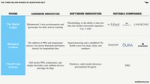
Phase 1 consisted of digital ledgers—companies that helped users track the basics like daily activity and nutrition without physiological context.
MyFitnessPal is a great example of this. The company helps users track macro nutrients and caloric intake but doesn’t provide information on how that impacts their bodies. It’s on the user to connect the dots.
On the hardware side, Phase 1 was unlocked by micro-electro-mechanical systems (MEMS). The miniaturization of sensors allowed daily activity trackers like Jawbone, Misfit, and Fitbit to flourish. Importantly, these companies did not invent MEMS, but they paired this technology with algorithms that could identify distinct movement patterns, like distinguishing walking data from that of someone brushing their teeth.
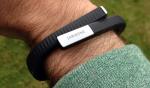
This phase’s campaign slogan was "10,000 steps"—essentially a marketing metric that became a global health standard despite having little scientific basis. Sensors were low-fidelity, primarily accelerometers only. And, data required a high "cognitive load" from users. You had to try to figure out what something as rudimentary as “steps” implied for your long-term health.
That’s why only a few of the businesses from this phase still exist today. FitBit sold to Google for $2.1B, but there was an acquisition spree of similar businesses that failed to answer “what now?” for consumers. Nike spent millions on R&D and marketing for its FuelBand before shuttering the entire business unit. Jawbone famously raised over $900 million in equity and debt from high-profile investors including Sequoia Capital, Andreessen Horowitz, Khosla Ventures, and Kleiner Perkins before entering a very public liquidation process in 2017. The list goes on.
Despite its shortcomings, Phase 1 popularized the idea of health monitoring and attracted early adopters. By the end of it, roughly ~12-15% of Americans had adopted the use of at least one wearable.
While Phase 1 centered on daily activity, Phase 2 captured the state of the body (i.e., how your body responded to that activity). This was primarily the result of three key advancements: sensing capabilities, battery life, and signal processing. Combined, these ingredients enabled companies like Whoop and Oura to analyze longitudinal data, provide biological context (e.g., sleep and readiness scores), and help users take action.
This phase solved the "so what?" of Phase 1, giving us the strain vs. recovery model. Data came primarily from high-fidelity optical sensors (PPG) that measured heart rate variability (HRV) and were paired with temperature sensors.
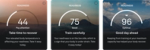
The biggest innovation was the "score" and underlying software, less so the hardware. Whoop and Oura didn’t succeed because they found a way to include pulse oximetry in their devices; they succeeded because they wrote the code to subtract noise from the blood flow signal and calculate HRV. Pulse oximetry had existed for decades (most notably as that “finger-clip thing” that measures your pulse at the annual checkup), but if you were to put a pulse oximeter from the early 2000s on an athlete the resulting data would be garbage. Oura and Whoop resolved that with data signal processing.
Extended battery life was also critical. It allowed devices to track users for over two weeks on a single charge as opposed to the five days that Phase 1 devices offered. This improved compliance by reducing the burden for consumers. And, longer wear times meant more data, allowing companies to compile a more comprehensive picture of someone’s health.
Whoop and Oura leveraged this treasure trove of data to modify behavior. Low sleep score? Consider eating earlier or practicing night time meditation. Low readiness score? Try taking it easy at the gym for a day or two. This biological context is exactly what defined the second phase of Quantified Self. It’s the value proposition that brought an early majority of Americans to the movement.
By the end of Phase 2, just under half of all Americans owned a wearable device.
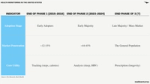
The promise of Phase 3 is closed-loop systems—multiple devices that continuously monitor and predict a user’s health.
Artificial intelligence is the obvious driving force behind Phase 3. For one, it’s enabling new sensing capabilities through sophisticated data-smoothing techniques. Modalities like electroencephalogram (EEG) for brain health or electromyography (EMG) for muscle health have typically produced data too noisy for use outside of a controlled clinical setting. But AI and edge computing may improve data quality just enough to make use cases like these a reality.
The bigger opportunity though is personalized health coaching. Oura and Whoop have already introduced AI-powered agents to transform raw biometric data into conversational health insights. Oura Advisor (launched March 2025) and WHOOP Coach (powered by GPT-4) act as virtual, in-app health experts that interpret long-term trends, rather than just displaying daily numbers. And, both companies are increasingly investing in AI models that anticipate illness or fatigue before symptoms appear.
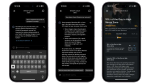
This marks a material step forward for both companies and wearable devices altogether. Armed with long-term datasets, deep consumer trust, and artificial intelligence, device companies are in a unique position to own the entire health stack.
Part 2: What’s fundamentally different now, and why we think value will accrue to hardware businesses.
In the next decade, we believe a handful of companies will own the "truth" about a person’s health—something we refer to as a biological system of record (BSoR).
In enterprise software, companies like Oracle and Salesforce own the "truth" about a company’s customers and finances. These businesses are referred to as a “system of record.” On a recent podcast with Jack Altman, Bret Taylor (Co-founder of Sierra, Chairman of OpenAI) explained why systems of record, like Oracle, created so much value:
“The reason why a system of record has always been the most valuable is that it’s the anchor tenant of your technology deployments…You ended up with a lot of value in those systems, which meant switching costs were really high. Similarly you end up accruing a lot of value either by collecting rent from your ecosystem or developing premium add-ons on top.”
Bret Taylor’s "anchor tenant" concept can be applied to Phase 3 of Quantified Self. In Phase 1 and 2, wearable device companies served as a pretty specific piece of the puzzle and didn’t have leverage in the broader health ecosystem yet. In Phase 3, the device becomes the anchor tenant of the health stack. Now, breakout companies like Oura and Whoop can add services like:
- Blood tests via Labcorp.
- MRIs via Prenuvo.
- Continuous glucose monitoring via Levels.
- Fertility tracking via Natural Cycles or Flo.
- Personalized supplementation via Thorne.
- And eventually, telehealth and primary care.
This is why Whoop and Oura fetched $10B+ valuations. Both businesses are uniquely positioned to verticalize because they have built high-trust, high-frequency relationships with their customers. Users check their Whoop and Oura apps first thing in the morning and rely on those apps to tell them how they feel. Not only does that real estate give Whoop and Oura a natural opening to prompt users to buy additional services (e.g., “don’t forget to schedule your blood test”) but the relationship they’ve established means consumers are more likely to trust the solutions they offer. Both companies clearly recognize this—Oura announced a lab testing partnership with Quest Diagnostics and Whoop announced the same with LabCorp.
Importantly, these hardware businesses can deploy these new features as premium tiers with near-zero marginal cost. This is akin to the Apple Health model—third-party apps (like a specialized AI longevity coach or a prescription delivery service) must “pay rent” to integrate with whoever owns the customer, in this case it’s wearable device companies.
If this all plays out as expected, the switching costs become enormous. To use the enterprise software analogy, the reason Salesforce is so hard to rip out is that all your other tools (e.g., email, marketing, finance) are plugged into it. In the same way, if you use Oura to manage your blood work, your fertility, and your glucose monitoring, switching becomes a much harder thing to do.
Just as Oracle became the "sun" for the enterprise solar system, the winning wearable company will become the "sun" for the consumer health solar system—serving as the central point for add-ons and compounding through net revenue retention. And that’s what makes hardware such an attractive investment opportunity in the age of AI and commoditized software.
Part 3: Where We Are Looking for Innovation.
At Will Ventures, we’re actively monitoring and investing in the Quantified Self market. Today, our focus is split across three categories of innovation:
1. Novel Sensing Capabilities
Over the last several decades, the sensors we use to track our health have not fundamentally changed. Instead, advanced software, data smoothing, and signal processing have enabled us to track new parts of our physiology. Like X-rays machines or MRIs, wearables are just tools. And over time, new data models and software have allowed us to use them with more sophistication.
Advancements in AI will accelerate and expand the use cases for wearable technology—leading to new sensing capabilities and specialized companies. Two areas we’re tracking particularly closely are hormonal health and neurocognitive monitoring.
- Female health: Wearables use algorithms trained primarily on male physiology, which treats the body as a linear system. In contrast, the female body is cyclical, governed by a complex hormonal rhythm that influences everything from resting heart rate to body temperature and recovery capacity. For example, standard wearables often flag physiological shifts—like a rise in body temperature or a drop in Heart Rate Variability (HRV)—as signs of illness or overtraining. Meanwhile, that change may indicate that a female has entered a different phase of her menstrual cycle. Companies like Clair Health and Lume Health are working to address this problem. Both companies aspire to use multi-sensor devices to detect hormone levels without blood draws.
- Neurocognitive monitoring: My teammate Aaron Miller did a fantastic job covering the brain health opportunity in his Substack titled “A Whoop for Your Brain.” The TL;DR is that a new crop of companies are attempting to monitor cognition, detecting when your brain is primed for deep work and/or when it needs rest. While the underlying technology and user experience still need to be ironed out, investors are starting to place bets: Atlas recently raised $14M to commercialize a brain wearable and former Zomato CEO, Deepinder Goyal, raised $54M to do the same with his new company Temple.
2. Ambient Monitoring
When we evaluate remote monitoring startups, the number one criteria is ease of use. The value in remote monitoring lies in longitudinal data, and the only way to get it is a low-friction experience.
That’s what makes ambient sensing so interesting—it’s the lowest friction tracking there is. Ambient sensing is the use of non-contact, passive sensors embedded in an environment (e.g., a home) to monitor human activity, behavior, or environmental conditions without requiring wearable devices or cameras. In other words, ambient devices track you without you ever having to put anything on.
- Eight Sleep is the poster child for this. By turning the mattress into a sensor, they’ve achieved near-100% compliance. The company recently raised $50M to expand into predictive, AI-driven health.
- Throne is launching a device that affixes to your toilet and analyzes your waste. The self-proclaimed “Whoop for your poop” is tackling the gut health market—a $74B market with few incumbents. Like Eight Sleep, this is a “set it and forget it” device that not only helps biohackers, but also aspires to help users with conditions like Crohn’s, inflammatory bowel disease (IBS), and cancer.
- Soma is pioneering ambient neurocognitive tracking. Instead of a headset, Soma leverages environmental sensors and "vocal biomarkers" to detect burnout and "clinical drift" before the user even realizes they’re struggling.
3. Software Aggregators
The strongest counterargument to our hardware thesis is the software aggregator—software companies that are acting as full-stack medical providers and integrating with any and all wearable devices. Companies like Lotus AI and Prana are two strong examples. Both companies are working to become a biological system of record for consumers—storing their medical records, wearable data, and more to support prescription fulfillment, lab tests, and AI-driven care plans.
If these companies successfully grab market share, they can disintermediate hardware companies, effectively replacing them as the “front door” for healthcare. Put differently, if a user’s source of truth is an app like Lotus rather than a device like Oura, the hardware becomes a fungible commodity and loses its pricing power.
However, these software aggregators face real platform risk. Ultimately, these aggregators are secondary consumers of data. And, if Oura or Apple decide to restrict data access or charge a “tax” for API calls the aggregator’s model breaks. Still, it’s a space worth monitoring and one we’re spending time on.
In closing, we’re entering an exciting new phase for Quantified Self. Over the last two decades, consumers have gradually taken more ownership of their health, leveraging wearables devices and tracking software to better understand their physiological status. With the advent of AI, that relationship will only deepen and present a much bigger and more durable opportunity to the companies that have survived long enough to seize this generational opportunity. Phase 1 of Quantified Self was about tracking, Phase 2 was about retrospective analysis, and Phase 3 will be built on closed-loop systems. And as AI commoditizes the coaching, the dataset and consumer relationship become the only moats that matter.
If you’re building in the consumer health space and this piece resonated, please reach out. We’d love to meet you.